Understand the Connection Between Stroke Awareness, Stroke Prevention, Aphasia Risk
Andrea BlackstoneJune is National Aphasia Awareness Month. The National Aphasia Association announced that the theme and initiative for the 2026 Aphasia Awareness month is “United for Aphasia Awareness.” (https://aphasia.org/aphasia-awareness-month-2026)
What is aphasia?
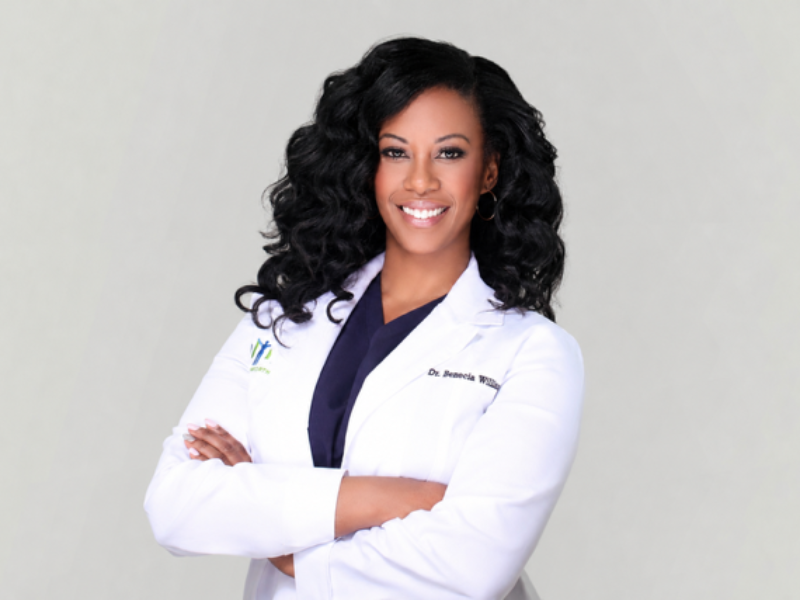
“Aphasia is difficulty talking and/or comprehending language secondary to damage to the part of the brain that controls language,” said Benecia Williams, DO. “Depending on the type of aphasia, some can form no words at all. Some mix words up. Some have difficulty finding words. While some can say words, it sounds like ‘a word salad.’ Nothing makes sense.”
Dr. Williams further explained that the most common cause of aphasia is a left hemisphere stroke, where language control is located.

If more than two million people in the United States alone live with aphasia, it is important to understand more about it, given that a mere “33% have never heard the term aphasia.” (https://aphasia.org/what-is-aphasia)
The Most Common Cause
The National Aphasia Association (https://aphasia.org/what-is-aphasia) noted that “a stroke occurs when blood flow to the brain is blocked or reduced, depriving brain cells of oxygen.”

Aphasia can result if the language areas of the brain are affected.
According to the CDC, “every 40 seconds, someone in the United States has a stroke.”
Keep in mind that “every 3 minutes and 14 seconds, someone dies of stroke in this country” and “every year, more than 795,000 people in the United States have a stroke.” (https://www.cdc.gov/stroke/data-research/facts-stats/index.html)
Stroke Risk Increases with Age
Dr. Williams stated that the highest stroke risk group are individuals who are over 85 years old. “The risk of a stroke roughly doubles with each decade of adulthood.”
What are stroke symptoms?
Dr. Williams explained that stroke symptoms include having difficulty talking, confusion, facial droop, and weakness on one side of the body.
“If aphasia is caused by a stroke, it is very evident as it can be a symptom of a stroke and is usually diagnosed right away,” she added.
In one survey, the CDC found that sudden numbness on one side of the body, a symptom of stroke, was recognized by 93% of respondents. Additionally, “only 38% were aware of all major symptoms and knew to call 9-1-1 when someone was having a stroke.” (https://www.cdc.gov/stroke/data-research/facts-stats/index.html)
Types of Aphasia and Symptoms of It
The symptoms of aphasia are indicated when individuals have “difficulty getting words out or understanding words,” according to Dr. Williams.
Expressive aphasia, also known as Broca's aphasia, is characterized by patients who can understand what others are saying but are unable to form the words to respond, according to Dr. Williams.
Patients who have been diagnosed with receptive aphasia have difficulty understanding words, but they can speak normally. And when patients have global aphasia, they cannot understand what others are saying, nor can they form words to speak.
Is aphasia recoverable?
“It depends on the cause and whether treatment is sought in time. An example would be a left MCA stroke caused by a blood clot. If caught in time and a clot medicine is given, it is possible that the brain doesn’t suffer permanent damage,” Dr. Williams stated.
Speech therapy, administered by a speech-language pathologist, is prescribed to help aphasia patients heal. However, “transcranial Magnetic Stimulation (TMS) combined with multimodality aphasia therapy represents a promising frontier in stroke rehabilitation. It’s not a cure, and it doesn’t work the same way for everyone,” Dr. Williams said.
Dr. Williams added that a device that is held near the scalp generates brief, focused magnetic pulses that pass painlessly through the skull and stimulate specific areas of the brain.
“Think of it like a remote control for targeted brain regions — no surgery, no medications, no sedation. The patient sits in a chair, a coil is placed near their head, and the pulses are delivered.”
Stroke and Aphasia Prevention
Dr. Williams noted that modifiable risk factors for stroke include controlling your blood pressure and taking medication as prescribed, not smoking, controlling your blood sugar if you are diabetic, diet, and exercise, and decreasing alcohol intake.
On the other hand, the sooner strokes are caught, the better. Time matters in terms of getting to the hospital for stroke treatment if one is suspected.
“For a clot-caused stroke, there is a small time window—ranging from 4.5 to 24 hours depending on the stroke—to administer clot-busting medicine from symptom onset. Other treatments include blood pressure management, heart monitoring, and, once medically stable, typically rehabilitation, physical therapy, occupational therapy and speech therapy if needed,” said Dr. Williams.
Visit Dr. Williams’ website via www.pmrfortworth.com. Follow her on social media: https://www.instagram.com/dr_b_will or https://www.facebook.com/drbwilliams.